French Newspaper: These are Causes of conflict between Morocco and Spain about Ceuta and Melilla
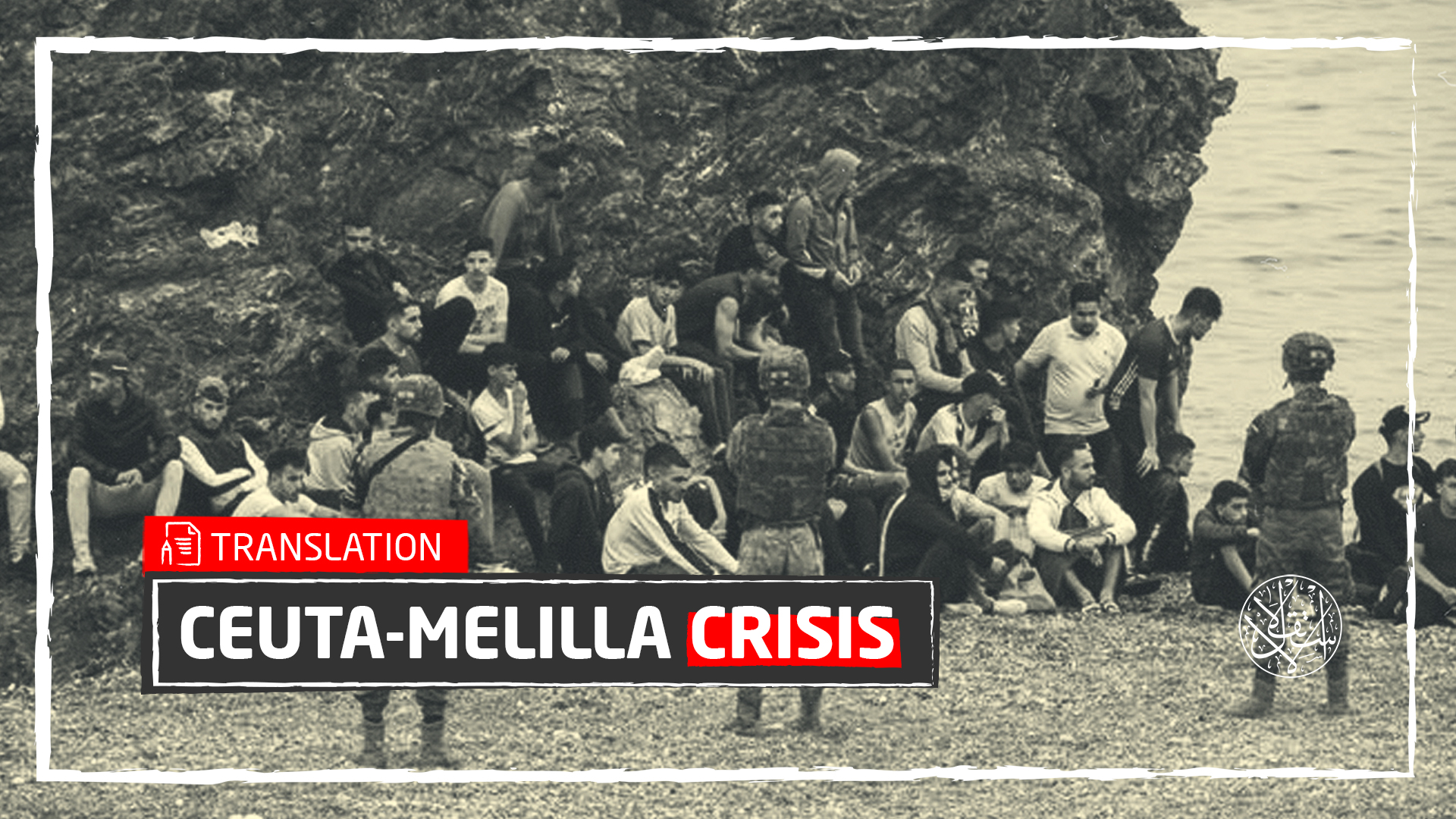
A French newspaper highlighted the arrival of more than 8,000 Moroccan migrants to the Spanish enclaves in Morocco, Ceuta and Melilla, between 16 and 19 May 2021.
“La croix” explained that the arrival of this number of Moroccans within a few days represents an immigration crisis, on the background of diplomatic tensions between Morocco and Spain.
On May 18, 2021, Spanish Prime Minister Pedro Sanchez went urgently to Ceuta and then to Melilla (two Moroccan cities occupied by Spain), he declared: “We will restore the regime in the city and on our borders as soon as possible”. The newspaper stated that “4,000 migrants were deported to these enclaves, and law enforcement authorities were deployed, to deal with the biggest migration crisis in years”.
Existing Tensions
Spain summoned the Moroccan ambassador, Karima Benaish, to inform her of “dissatisfaction”, what amounts to a deliberate act on the part of Rabat to open the borders, after the Spaniards agreed to treat the “Polisario” separatist leader Ibrahim Ghali, who was infected with Corona.
The Spanish courts announced, in this context, that they had reopened a case of crimes against humanity against him.
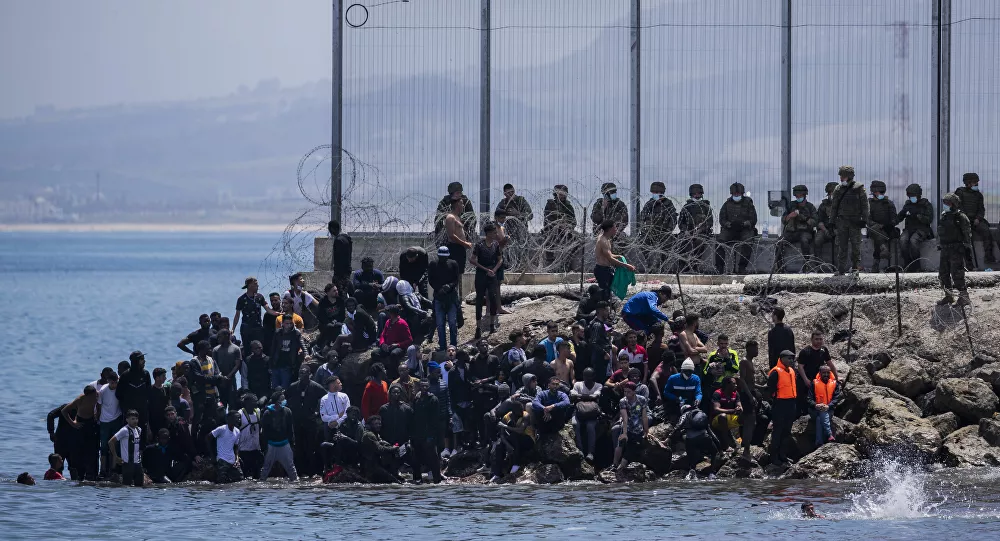
In light of difficult economic conditions, migrants from Morocco and sub-Saharan Africa try crossing to Ceuta, either by swimming or on foot.
For some time now, the relations between Rabat and Madrid have been tense, on the background of Spain receiving the Secretary-General of the “Polisario” Front, which is in a dispute with Morocco about the sovereignty over the Sahara region.
The author of a dissertation on Ceuta and Melilla, Yves Zorlu, explained this crisis built on the existing tensions since little more than a year and a half.
He explained that “Morocco has closed its borders to eliminate the smuggling and to suffocate the economy of the two cities”. Morocco wants Spain to recognize its sovereignty over the Western Sahara.
Ceuta and Melilla were regularly present at the heart of the dispute between the two countries, Morocco has demanded of them since its independence in 1956.
It is indisputable that leaving those traces of colonialism would undermine the country's unity.
The two cities were recognized in the Spanish constitution of 1978 and in 1995, and they attained the status of “independent cities”.
“These cities that were seen from Madrid are Spanish, even before the incorporation of the Kingdom of Navarra by Spain in 1516”, as says a specialist in the affairs of the region “Zorlu”.
The Spanish sovereignty over Ceuta dates back to 1580 and over Melilla until 1496.
The cities of Ceuta and Melilla are located in the far north of Morocco, and they are under Spanish administration, Rabat considers them to be “occupied holes” by Spain, which surrounded them by a fence of barbed wire with a length of about 6 km.
Prey to Migration
Spain also retained control of some islands and rocks on the northern Moroccan coast. In 2002, the two countries almost entered the war after Morocco's attempt to retake Persil Island, it is an uninhabited rock near Ceuta, but the conflict was defused with American mediation, However, these remnants of the Spanish occupation continued to poison the relations with Rabat.
Zorlu said: “These islands have no value, and Spain has considered returning them to Morocco several times, but this may be an excuse, to inflame the pressure on Ceuta and Melilla”.
Currently, more than half of the 85,000 inhabitants of both cities are of Moroccan origin, but they are still very much attached to Spanish citizenship.
For her part, Sabrina Grillo, a lecturer on the history and culture of contemporary Spain at the University of Paris-East Creteil, remembers that by saying: “These border cities, due to their strategic geographic location, have always been prey to illegal migration”.
Ceuta and Melilla constitute the only land border between Europe and Africa.
European Border and Coast Guard Agency (Frontex) has invested heavily in protecting the two cities from immigration. They are currently surrounded by a double mesh wall with a height of 6 meters, and guarded by surveillance towers, a radar surveillance system, and infrared cameras.
This is the wall that several thousand migrants collide with every year, most of them are from sub-Saharan Africa.
"La Croix" concluded its report by saying: “But the situation is different this time, because the entry was through the sea, many migrants are Moroccans, they are fleeing from poverty, which has been exacerbated because of Corona”.