Sports Expert: Rebuilding Syrian Football Starts at the School Level, Not With the National Team
The crisis facing Syrian football is no longer limited to declining results or a lack of achievements. Rather, it now reflects structural shortcomings that extend from administration and legislation to infrastructure and talent identification mechanisms.
After years of war and institutional decline, the sports sector faces complex challenges that require comprehensive reconstruction based on professionalism, investment, and good governance, rather than relying on temporary solutions that have failed to halt the downward trajectory.
In this context, Omar al-Haj Hasan , an academic and researcher in sports management at ESG Sport Paris, told Al-Estiklal newspaper that the fundamental problem does not lie in a shortage of talent, but rather in the absence of professional management and the lack of independence of sports federations.
Omar al-Haj Hasan called for the launch of a national project to restructure Syrian football, make use of Syrian expertise both inside and outside the country, reform school sports, and establish a legislative and investment environment capable of moving clubs from amateurism to professionalism.
A Crisis-Ridden Society
How do you assess the state of Syrian football, from the national team to the local clubs?
The crisis facing Syrian sports has never been a crisis of talent or a lack of passion among fans. Rather, it has primarily been, and remains, a crisis of management.
This shortcoming has become particularly evident when comparing individual sports with team sports. While individual sports have achieved successes thanks to exceptional talent and personal efforts, team sports have exposed the extent of the shortcomings within sports federations, which lack qualified administrative personnel capable of managing complex sporting systems according to professional standards.
The Syrian Football Association has been experiencing a chronic lack of vision and strategy. There are no long-term objectives or clear development plans; instead, decisions are driven by immediate reactions and temporary solutions.
This situation is not a product of the current period. It dates back to before the fall of Bashar al-Assad’s regime and has continued afterward with the same mindset.
Most of the personnel, whether from areas that had previously been liberated or from areas that had been under the regime’s control, emerged from the same administrative environment, without any genuine change in working methods or management practices.
This dysfunction is particularly evident in the coaching system. While the head coach of the senior national team enjoys technical stability because of concerns over the consequences of terminating his contract and the associated penalty clauses, contracts for youth-team coaches are typically concluded for short periods of no more than one year. As a result, they become subject to the pressure of immediate results and social media.
A clear example of this is the under-17 national team, which went through more than four coaches of different nationalities within a short period, amid the absence of a technical director within the federation responsible for evaluating the work according to scientific and developmental criteria, rather than reacting to short-term developments.
When assessing the state of Syrian football, from the national team down to the local clubs, we find ourselves facing a deeply troubled and significantly deteriorated landscape.
Those responsible for managing the game have become accustomed to prioritizing personal gains and temporary solutions, far removed from professional management standards and long-term planning.
The use of personal loyalties as a key criterion for appointing officials, coupled with the lack of specialized academic qualifications among most federation and club administrators, has also contributed to the decline of the game and the absence of any genuine national project to revive and develop Syrian football.
Rundown Structure
Could you give us an overview of the state of club infrastructure and sports facilities in Syria?
The technical level of football cannot be separated from the state of the country’s infrastructure. Responsibility for sports facilities is divided among the Ministry of Sports and Youth, the former General Sports Federation, the Ministry of Education, as well as facilities owned by the clubs themselves.
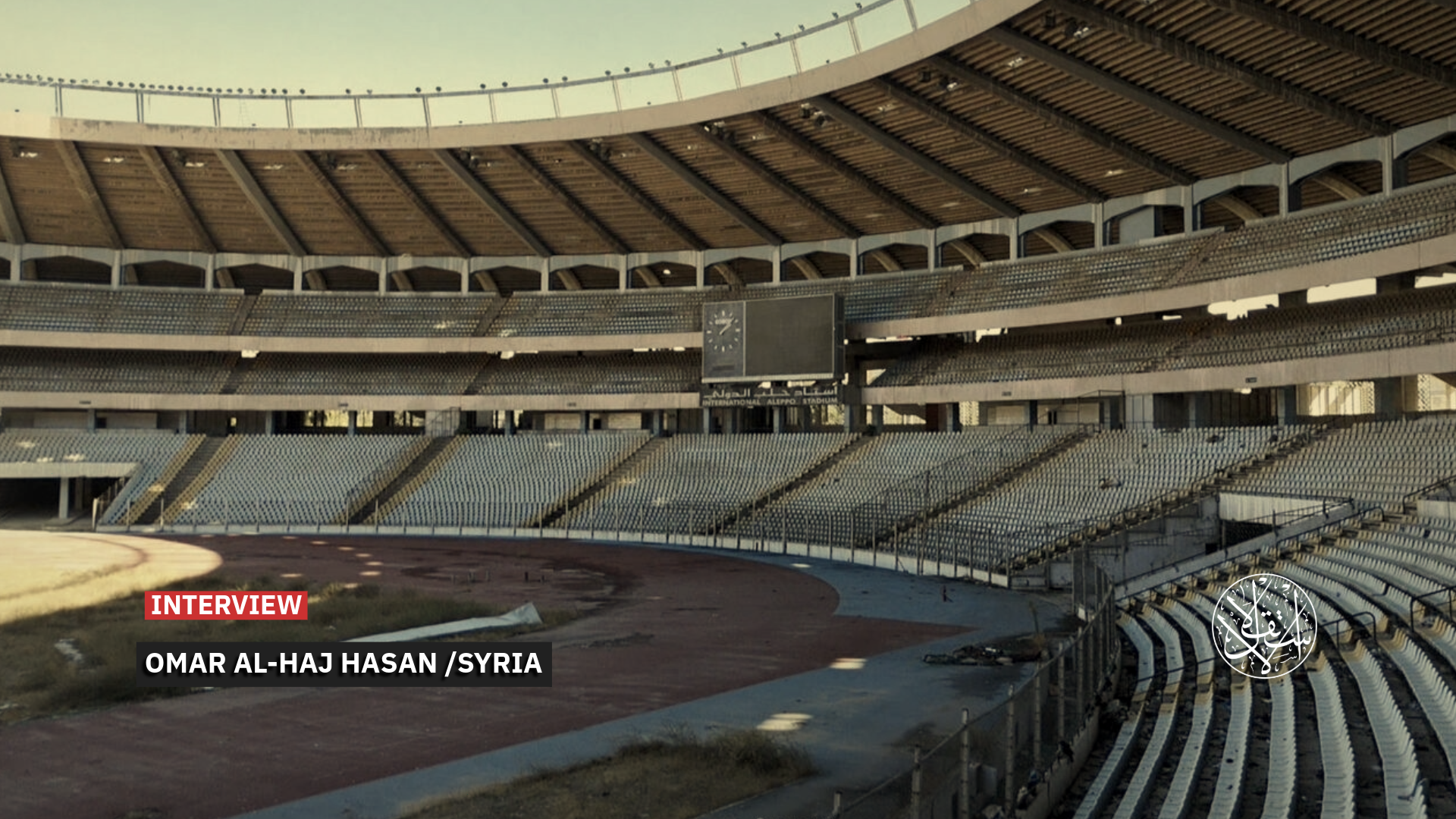
Most sports facilities in Syria suffer from deterioration and obsolescence. They were built according to outdated designs and have not undergone the development or modernization needed to keep pace with the major advances the sports infrastructure sector has witnessed globally over recent decades.
The years of the revolution further exacerbated the deterioration, after the former regime converted a large number of stadiums and sports facilities into barracks and military sites, causing them to become unusable or sustain extensive damage.
Today, the situation requires either comprehensive rehabilitation of these facilities or the construction of new stadiums meeting modern standards. Such a project would require substantial financial resources, government support, and a clear national plan to revive sports infrastructure across Syria’s various provinces.
As a result, the majority of these facilities are now unable to host sporting events except on a very limited basis and with considerable difficulty, directly affecting the development of the game and the preparation of players.
Roadmap
How can Syrian clubs be helped to transition into independent, professional organizations?
The lack of technical, administrative, and financial independence among sports federations is one of the most significant obstacles to the development of Syrian football.
Technical and administrative decisions are not made within the federation based on studies and sporting criteria. Instead, they remain subject to government procedures and bureaucracy.
Many plans require prior political and administrative approval before they can be implemented, effectively stripping the federations of their genuine role in planning and development.
This highlights the need for a clear roadmap toward professionalism and investment through bold legislation and modern working mechanisms, most notably:
- Privatization and governance: Developing gradual programs to privatize part of the clubs and attract investors and capital, while imposing strict standards to ensure that club administrations possess the necessary managerial, legal, and financial expertise.
- Creating an appropriate legislative environment: Enacting laws that encourage investment in sports, including sponsorship, media rights, and sports merchandise, thereby creating an attractive economic environment.
Investment remains a double-edged sword. It can turn into a risky venture in the absence of proper regulations and amid the continued presence of corruption and favoritism.
At the same time, however, it can become a genuine turning point if it is regulated according to clear standards and successful international models.
In that case, the entry of major companies and media organizations into the sports sector would be a key factor in increasing financial resources, strengthening competitiveness, and significantly raising the standard of the league and its clubs.
Strategic Talent Pool
What mechanisms are needed to rebuild school sports as the primary pool of talent?
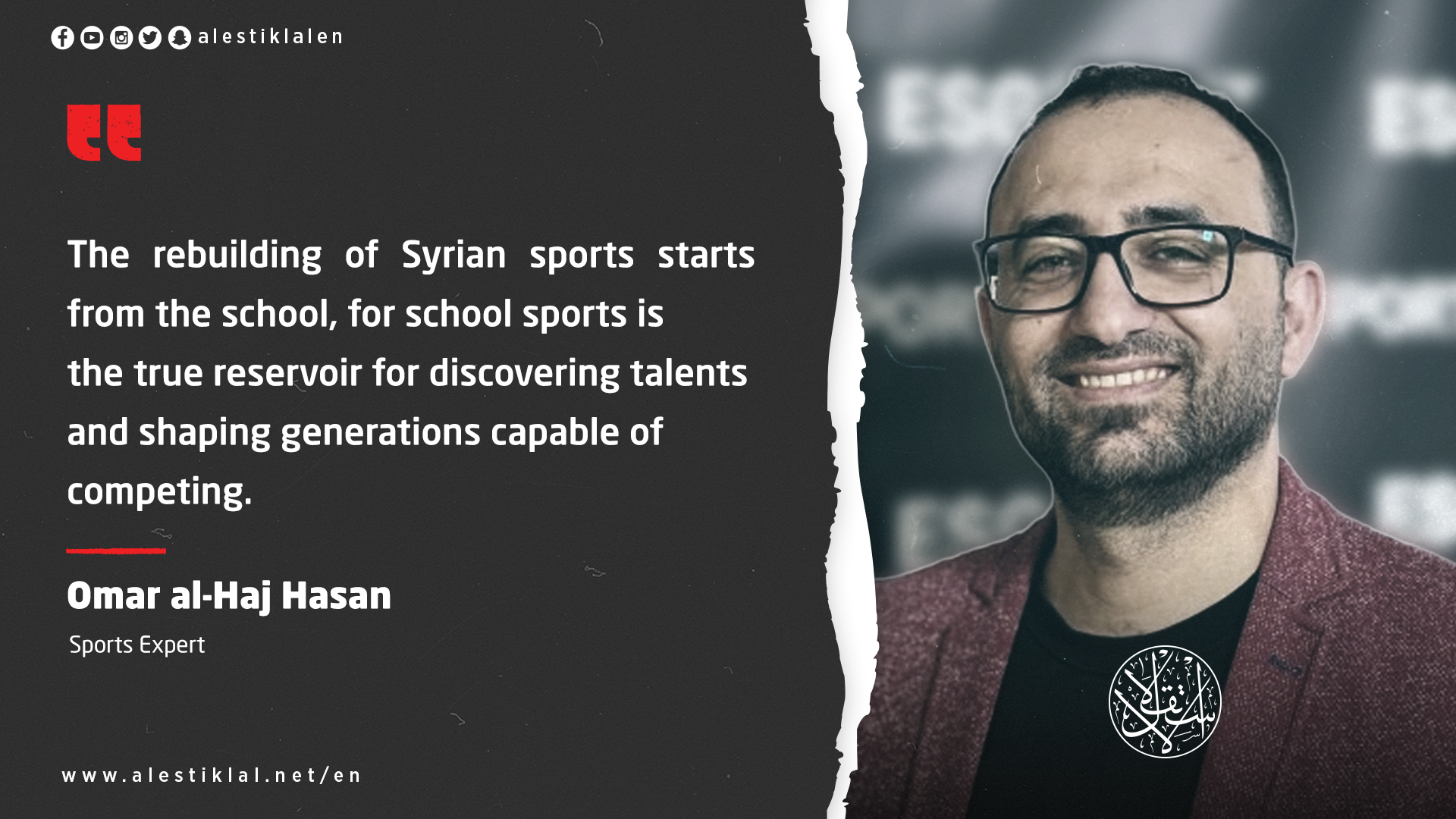
Schools are the first foundation for identifying sporting talent. Therefore, rebuilding the sports system must begin with educational institutions.
To achieve this, physical education curricula must be developed and the number of physical education classes increased. Former players and athletes should also be brought in to teach these classes, alongside the establishment of specialized university colleges and departments dedicated to football sciences and sports management, based on modern scientific principles.
Adequate budgets should also be allocated to organize regular school tournaments, while providing the necessary pitches, equipment, refereeing personnel, and media coverage. This would make it possible to identify talent at an early stage, before players move on to specialized academies or clubs where their skills can be refined and developed.
Drawing on Expertise
Can Syrian sports expertise at home and abroad be leveraged and integrated with successful international models?
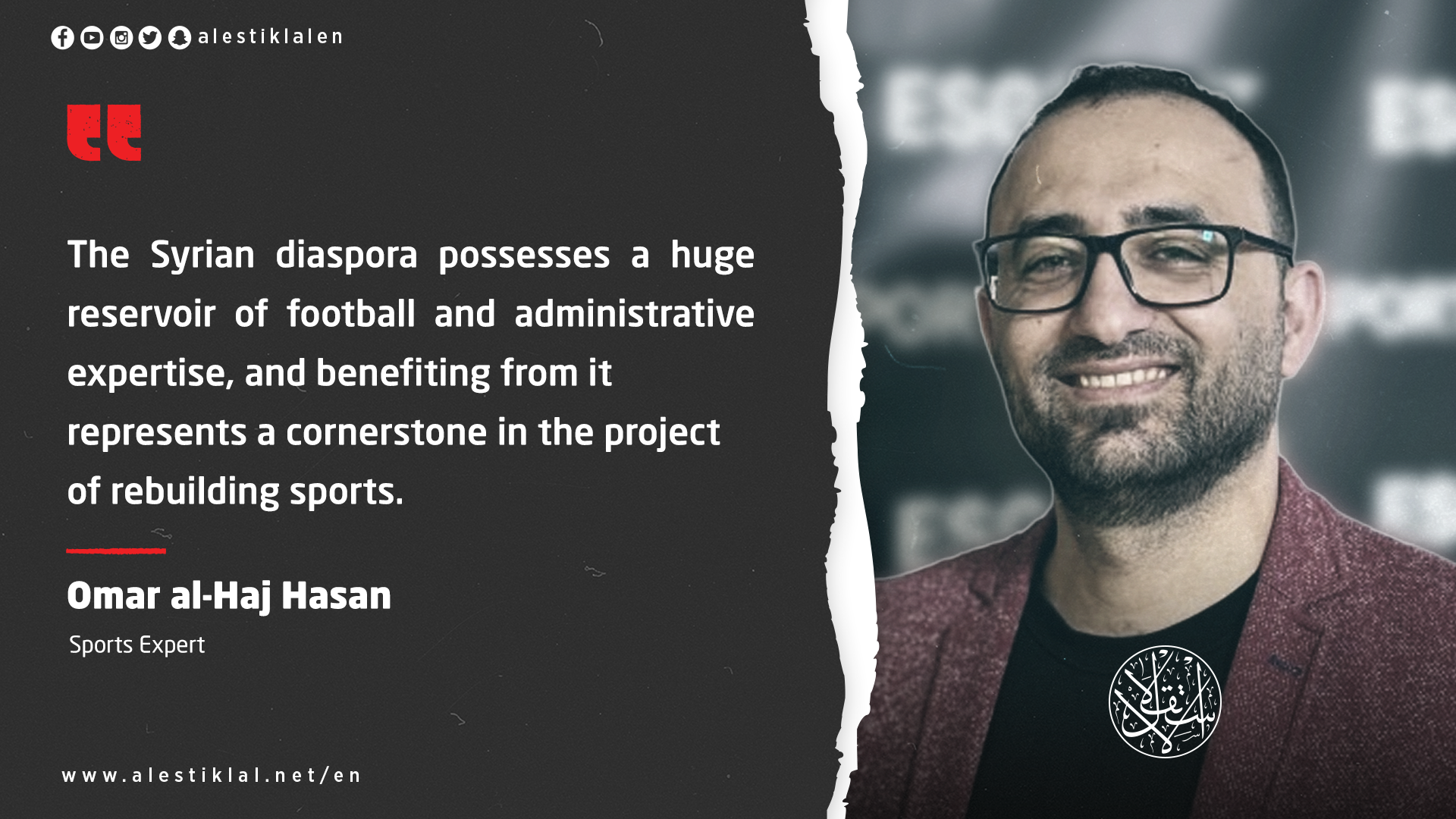
Syrians at home and abroad possess a wealth of sporting and administrative expertise that could serve as a key foundation for rebuilding Syrian football.
Professionals who emigrated during the 1980s and 1990s, and then in the early 2000s, have made a clear mark in the fields of sports administration and sports media, particularly in the Gulf states.
In recent years, they have been joined by a new generation of Syrians working in Europe and other developed countries, many of whom have studied or worked within international sports institutions and academies and have gained advanced professional experience.
Integrating this expertise with local talent could provide the cornerstone for modernizing Syrian sports in general, and football in particular, moving it from an amateur environment toward a professional system based on scientific management and long-term planning.