Al-Islah Party at a Crossroads: The Repercussions of the U.S. Designation on Yemen’s Power Balance
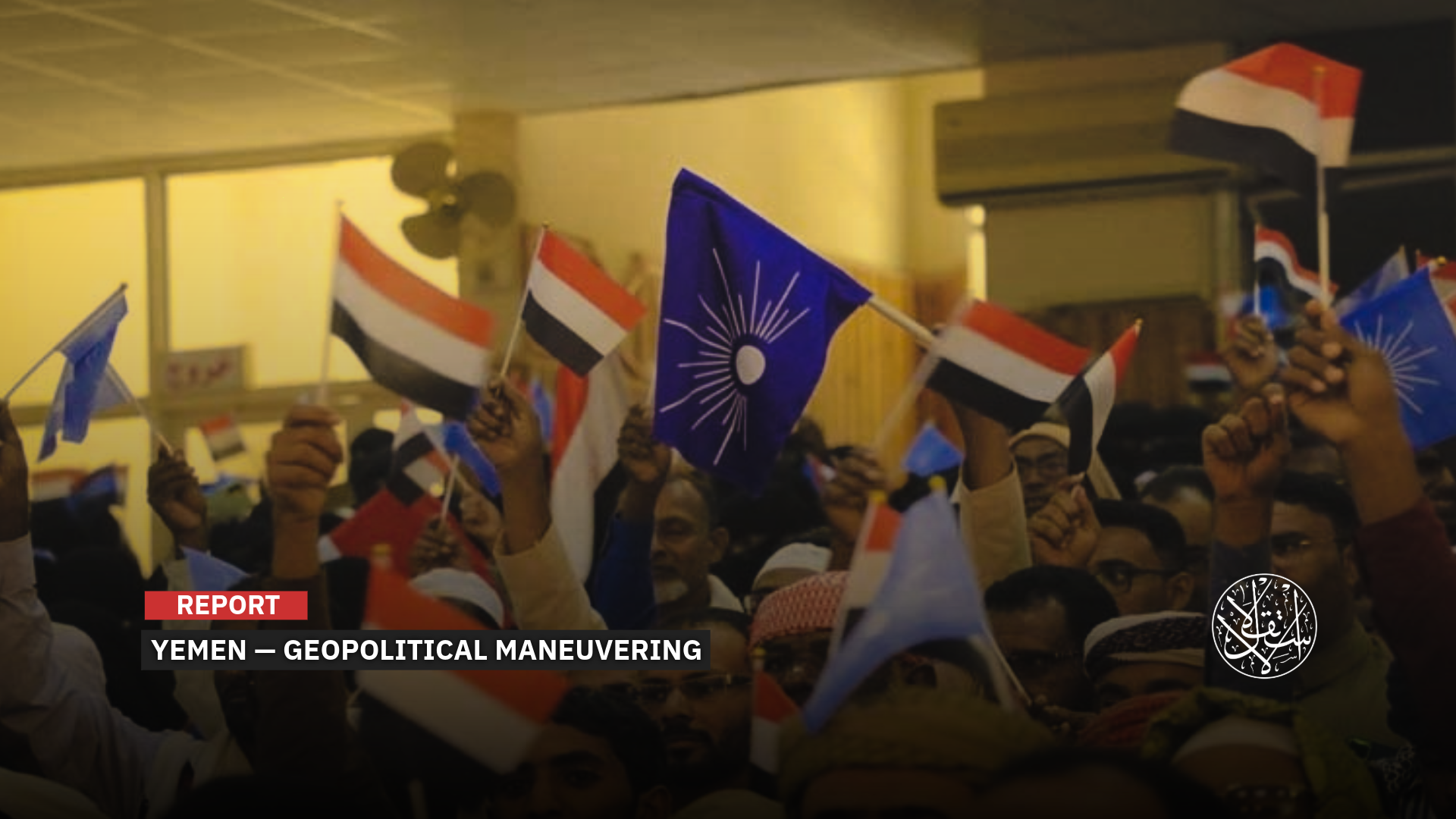
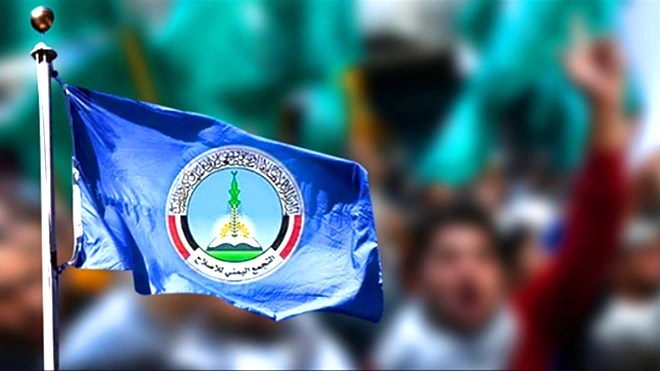
At a highly sensitive political moment, where multiple internal and regional dynamics intersect, media leaks have emerged regarding the possibility that the United States may move to designate the Yemeni Islah Party as a terrorist organization, raising wide-ranging questions about the implications and context of such a step.
This comes at a time when the internationally recognized Yemeni government says it has regained a measure of initiative in the southern provinces by reorganizing the security and military landscape and achieving a relative improvement in services, alongside reducing the influence of UAE-backed local actors.
These developments coincide with broader political activity, including advanced discussions on the peace process between Saudi Arabia and the Houthis, as well as indications of potential strategic projects, among them a plan to build a Saudi oil pipeline through Yemeni territory to the Arabian Sea.
Press leaks, citing multiple sources, indicate preliminary U.S. moves, including formal inquiries directed at the Islah Party as part of a legal review that could lead to its designation as a terrorist organization under U.S. lists, along with a large number of affiliated entities.
The leaks add that the party responded to these inquiries through official Yemeni government channels, a step reflecting its awareness of the sensitivity of the issue and its potential repercussions.
For the Islah Party, this development, if it turns into a formal measure, would represent one of the most serious challenges in its political history, given the possible legal, political, and financial consequences, both for its domestic activities and its external relations.
The party had previously announced, in 2016, that it had no organizational or political ties to the international Muslim Brotherhood, affirming its adoption of a purely national agenda.
The party is considered one of the most prominent political components within the camp of the internationally recognized government, and a key partner, directly or indirectly, in managing the conflict with the Houthis and in balancing the influence of other formations in the south.
UAE Campaign
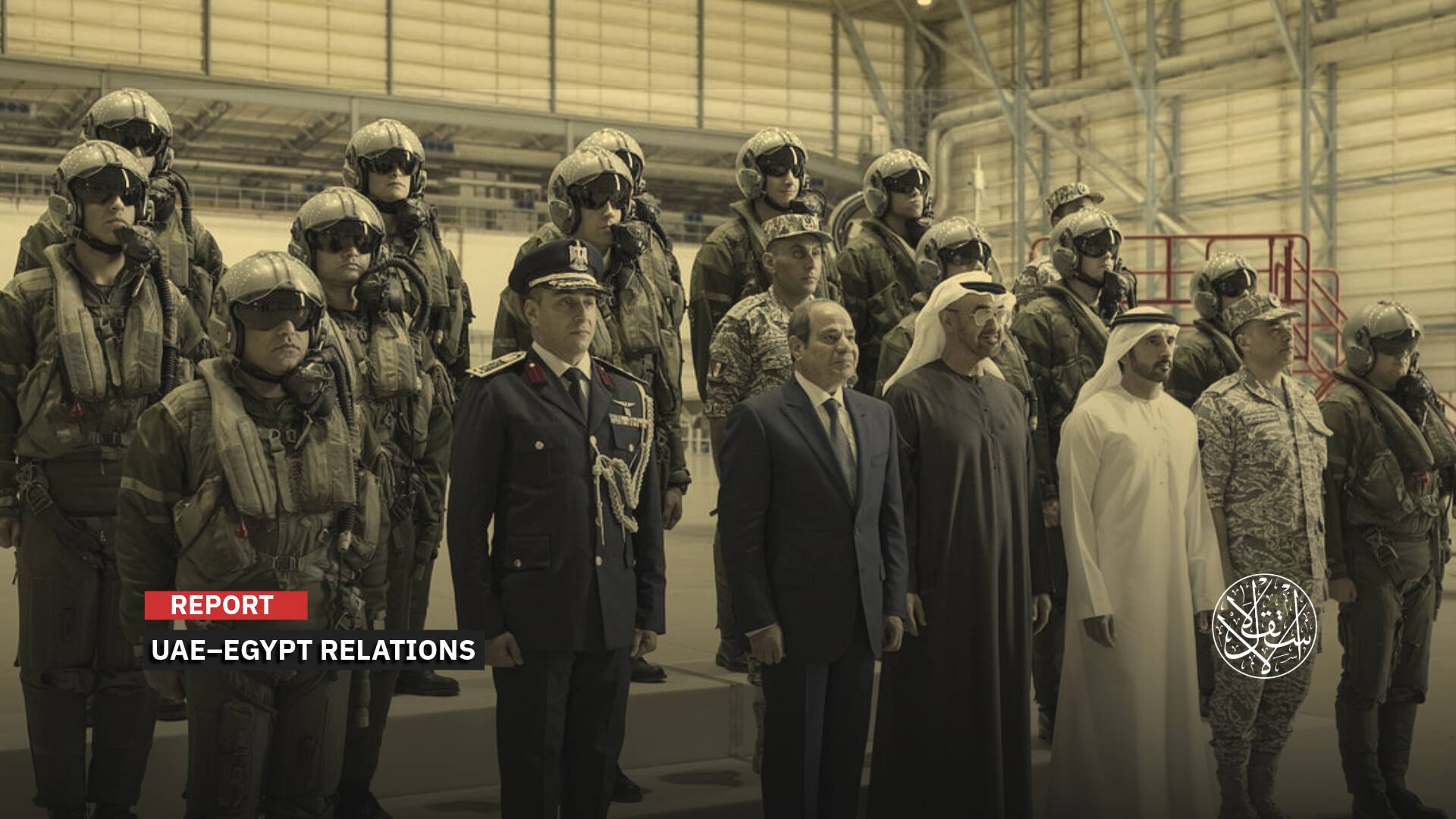
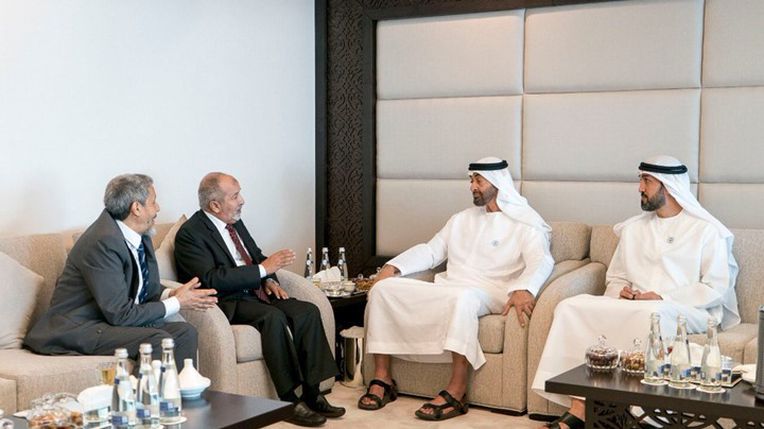
A Yemeni government source revealed an intensive campaign led by the UAE within the United States aimed at undermining the image of the Islah Party, as part of efforts to push Washington toward designating it as a terrorist organization.
The source explained that these efforts take the form of sustained pressure on decision-making circles within the U.S. administration, targeting the party as one of the most prominent and organized political forces supporting the internationally recognized Yemeni government.
According to the source, the campaign is not based on professional standards or genuine counterterrorism assessments, but rather, in his words, relies on the use of political and financial influence, through building networks within American institutions and funding relationships that serve this objective.
He noted that designating the party is not a simple technical measure, but carries deep implications that could affect the structure of Yemen’s internationally recognized government and alter the balance of the conflict with the Houthis.
In the same context, an informed Yemeni source stated that movements related to this file began months ago in Washington, before recently escalating with direct Emirati backing, including the use of U.S.-based think tanks supported by Abu Dhabi to prepare reports and dossiers in support of the designation process.
He added that these materials were submitted to U.S. officials concerned with counterterrorism, including Deputy Assistant to the President and Senior Director for Counterterrorism, Sebastian Gorka.
The British outlet Middle East Eye reported, in a piece dated April 28, citing U.S., Saudi, and Yemeni sources, that Abu Dhabi has intensified over the past four months its efforts to persuade Washington to include the Islah Party on the “Specially Designated Global Terrorists” (SDGT) list, arguing that previous measures against some branches of the Muslim Brotherhood were insufficient.
Sources indicate that the U.S. State Department has already begun canvassing regional views, with the administration sending a list of questions to Saudi officials and another to the Islah Party, as part of a comprehensive assessment before any formal decision is made.
Observers believe this move goes beyond a conventional designation issue, reflecting a broader effort to reshape the map of influence in Yemen, both in the north and south, amid an escalating political and ideological struggle over the nature of the regional order.
In this context, some assessments point to an intense rivalry between a UAE-led axis seeking to restructure state systems, and a Saudi-led approach focused on supporting national states and preserving their cohesion.
Within this framework, the UAE’s push on the designation of the Islah Party is driven by several political calculations, including the aftermath of January developments that saw a decline in its influence in some coastal areas and Yemeni islands, as well as a reduction in the role of its local allies, particularly the Southern Transitional Council.
According to this reading, the party is not viewed merely as a political rival, but as an actor that has contributed to weakening Emirati influence and obstructing the projects of its allies.
From this perspective, Abu Dhabi seeks to secure a political and symbolic gain by pushing for a designation decision that can be presented as an achievement compensating for field setbacks and reinforcing its image as a decisive actor.
It is also leveraging regional developments and its involvement in security alliances to strengthen its position as a partner in confronting threats and to expand its influence within Western decision-making circles.
This approach relies on a narrative linking the stability of allies to the need to confront what it describes as extremism, while taking advantage of the international climate during times of crisis, when policies tend to adopt more hardline approaches and designations may pass without sufficient scrutiny of the distinctions between organized political activity and extremist actions.
In a related context, efforts toward designation are seen as a means of redefining the position of the Islah Party, shifting it from a “political partner” to a more complex legal status, which would affect its role in any future political arrangements and intersect with broader attempts to reshape Yemen’s political landscape.
Additionally, some assessments suggest that this trajectory overlaps with attempts to justify past (Emirati) violations in southern Yemen by framing them within the context of “counterterrorism,” alongside ongoing legal cases, including a lawsuit filed in mid-May by Islah leader Ansaf Mayo against a U.S. security company that worked with the UAE.
The Islah Party is also viewed as one of the main obstacles to secessionist projects in southern Yemen, in the form supported by Abu Dhabi, adding another dimension to its targeting that goes beyond ideology to questions about the structure and future of the Yemeni state.
Ultimately, targeting “the head of al-Islah” is not the sole objective of the UAE’s designation campaign, but also a means of curbing Saudi influence in Yemen. If al-Islah were to fall under a terrorism designation, Saudi Arabia could find itself alone facing Iranian expansion from the north and the rise of ambitious proxy actors in the south and east aligned with the UAE and “Israel”, potentially creating “a ring of fire” that could be used to pressure the Kingdom and put its regional leadership role at stake.
The Saudi Position
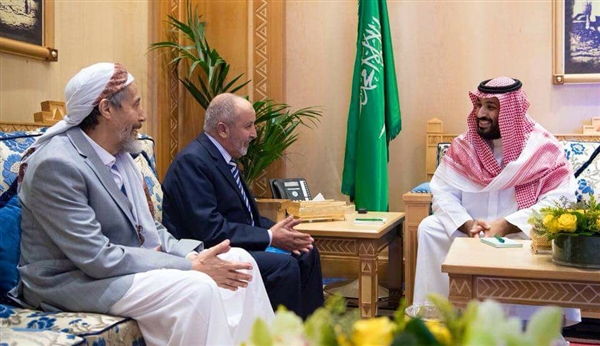
Press reports indicate that the Trump administration sent a list of questions to Saudi officials regarding the Islah Party, as part of its internal deliberations over the possibility of designating it, while similar inquiries were also directed to the party itself within the evaluation process.
The Middle East Eye newspaper quoted a U.S. official as saying that any Emirati push to have the party designated as a “Foreign Terrorist Organization” (FTO), the most stringent classification, could provoke an angry reaction from Saudi Arabia.
So far, however, Riyadh has not issued any clear public position on these deliberations, raising questions about its willingness to stand by its allies in such sensitive matters, and prompting deeper inquiries into the nature of its relationship with the Islah Party and whether it truly views it as a strategic ally.
In practice, Saudi Arabia maintains a broader network of relationships within the Yemeni arena and does not rely solely on the Islah Party. Politically, Riyadh tends to support the General People’s Congress, to which Presidential Leadership Council Chairman Rashad al-Alimi belongs, along with most ministers in the government of Shaya al-Zindani, as well as the leadership of both the House of Representatives and the Shura Council.
Militarily, Saudi Arabia has, over the past years, worked to establish and develop armed formations parallel to the national army, largely composed of Salafi groups loyal to it, reflecting an approach aimed at diversifying its instruments of influence rather than depending on a single actor.
Accordingly, the Islah Party does not appear, under this reading, to be a decisive or indispensable ally for which Saudi Arabia would deploy its full weight in defense, but rather one component within a broader landscape managed by Riyadh through multiple balancing calculations.
In fact, Saudi Arabia’s approach to the issue of designating the Islah Party reflects a high degree of political pragmatism based on managing, rather than resolving, competing balances. For Riyadh, the party is neither an untouchable strategic ally nor a disposable liability, but a tool within a wider framework for managing the conflict in Yemen.
From this perspective, Saudi Arabia seeks to preserve the party’s “function” within the equation without committing to it as an exclusive option, while maintaining sufficient distance to adapt to any international shifts, including a potential designation scenario.
At the same time, Riyadh understands that fully sidelining the party could disrupt the balance within the anti-Houthi camp and open the door to a redistribution of influence in ways that may not serve its interests, whether benefiting the Houthis or expanding the influence of other regional allies.
As a result, it operates within a dual strategy: containing Islah without empowering it, and balancing Emirati influence without directly confronting it.
Estimates suggest that Saudi Arabia may prefer to avoid public opposition while working behind the scenes to mitigate or delay any potential decision, alongside recalibrating its relationship with the party without severing ties.
If Washington proceeds with the designation, the Kingdom is likely to adapt to the new reality by reengineering the government camp, strengthening alternative political and military forces, while maintaining indirect channels with Islah’s base to avoid a significant vacuum in the balance of confrontation with the Houthis and in the rivalry with the Southern Transitional Council.
It is also possible that Riyadh may seek to slow the process indirectly or encourage a political repositioning of the party to reduce the cost of its international targeting. In all cases, Saudi Arabia appears committed to maintaining a balanced policy among Yemeni actors, preventing the dominance of any single party, whether al-Islah or UAE-backed forces, and preserving its ability to manage the margins of the Yemeni landscape.
Al-Islah–Muslim Brotherhood Ties
In response to the Emirati efforts aimed at pushing for its designation, a source within the Islah Party told Middle East Eye that the party is working to refute these claims through communication with the U.S. State Department via intermediaries, stressing that it is an independent Yemeni entity and not an organizational extension of the Muslim Brotherhood.
Regarding the inquiries recently directed at the party by the U.S. administration, an informed Yemeni source explained that they focus on the nature of al-Islah’s relationship with the Muslim Brotherhood, as well as on files related to certain figures affiliated with the party who had previously been sanctioned by the U.S. Treasury and State Department in past years, including Sheikh Hassan Abkar and businessman Hamid al-Ahmar.
So far, the party has maintained complete silence regarding the circulating reports about the possibility of its designation, with no official statement or clarification issued. It appears to prefer keeping the matter within non-public channels, away from media debate and political polarization.
The party also seems to be counting on a pivotal Saudi role in curbing the designation process by influencing the U.S. position and pushing it to reconsider. It is aware that Riyadh possesses political and diplomatic leverage which, if activated, could help obstruct this trajectory and counter Emirati efforts, widely viewed as part of a broader competition for influence in the Yemeni arena.
In an alternative reading, the assassination of al-Islah Party figure Abdulrahman al-Shaer in Aden on April 25, 2026, can be viewed as a revealing indicator of the party’s international presence and its position within Yemen’s political equation.
The incident was followed by a wave of widespread condemnations, including from the United States and key European countries such as Germany, France, and the United Kingdom, as well as from Turkiye, Japan, and the European Union, while Russia expressed concern.
It can also be interpreted that the visit of the European Union ambassador to Taiz, and his meeting with al-Islah leaders, reflects a level of political engagement that underscores a degree of European interaction with the party.
The significance of this interaction deepens when viewed alongside the Islah Party’s condemnation, on the same day, of an attempted assassination targeting the U.S. president and vice president, reflecting a pattern of mutual engagement and signaling the party’s inclusion within the sphere of international attention.
In this context, observers see this relatively broad consensus in condemning the incident as an indication of international acceptance of engaging with al-Islah, and a rejection of efforts to isolate or demonize it, given its role as a key actor in the Yemeni landscape. Any move toward designating the party, they argue, could disrupt existing power balances and complicate the web of regional and international interests tied to the Yemeni file.
From the perspective of underlying motives, Abdulsalam Mohammed, head of the Abaad Center for Studies, argues that pushing the designation file by the UAE and “Israel” is aimed at pressuring Saudi Arabia and weakening its alliances in Yemen. Meanwhile, the United States is seen as seeking to use the issue as leverage to push Riyadh toward a strategic repositioning, whether in its relationship with China or in the level of its engagement in confronting Iran, alongside supporting an approach focused on dismantling the Houthi group militarily.
Accordingly, three main scenarios are proposed:
The first, and most likely, is a U.S.–Saudi understanding that delays the designation in exchange for internal reforms and the imposition of limited sanctions, without fundamentally affecting the balance of power.
The second involves partial sanctions on the party, which could negatively impact the Saudi role while strengthening the position of the Houthis and Iran.
The third, and least likely, is a full designation of the party as a terrorist organization, a step that could lead to broader instability without achieving meaningful strategic gains.