Official Admission of the Execution of Journalist Austin Tice: Will the U.S. Judiciary Prosecute Bashar al-Assad?
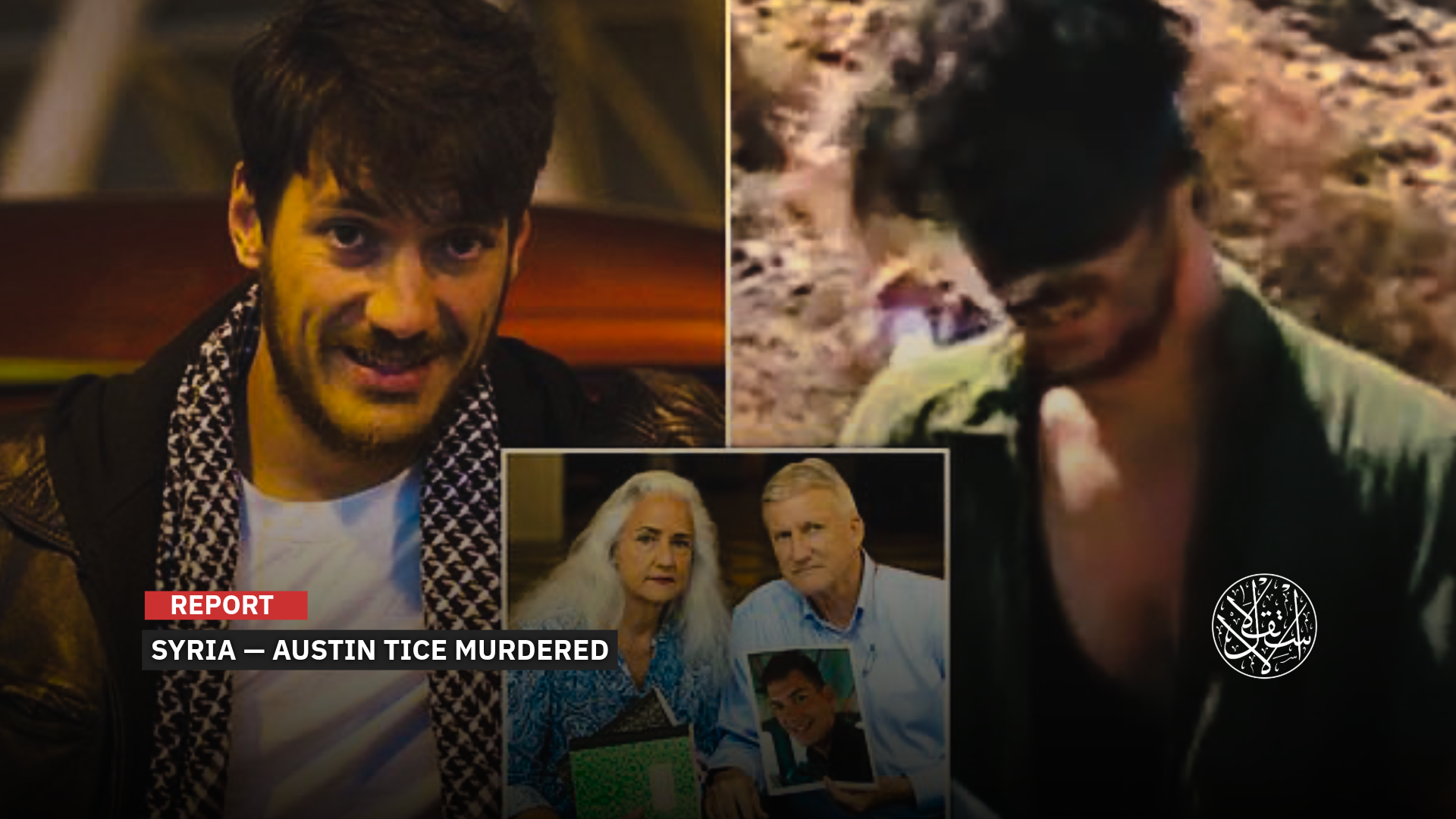
The United States cannot execute arrest warrants in another country without that country’s cooperation.
One of Bashar al-Assad’s top advisers has provided a documented testimony implicating the Syrian president personally in the killing of American journalist Austin Tice, who was detained in 2012 and held in a secret prison in Damascus.
Major General Bassam al-Hassan, who served as the director of the security and military office at the Presidential Palace until the fall of al-Assad regime, admitted that al-Assad himself issued the order to execute Tice.
The journalist had been arrested at a checkpoint run by Syrian intelligence in 2012 while covering the regime’s bombardment of the Damascus countryside.
The Execution of Austin Tice
In a video interview with a CNN correspondent from inside his current apartment in Beirut, Major General Bassam al-Hassan stated that Austin Tice is dead.
The interview, secretly recorded using hidden cameras worn by the team, was released by CNN on October 28, 2025. Al-Hassan added that he had informed investigators from the Federal Bureau of Investigation (FBI) of Tice’s death as part of a deal he struck with the bureau to provide information about the era of the ousted Bashar al-Assad.
In return, he was allowed to return to Beirut in April 2025 from Iran, where he had fled immediately after al-Assad’s downfall.
Bassam al-Hassan, a general and one of the founders of the National Defense Forces militia, formed to suppress the Syrian uprising, later became the director of the security and military office at the Presidential Palace of the now-ousted Bashar al-Assad.
He also served as al-Assad’s strategic affairs adviser from August 2008 until the regime’s collapse on December 8, 2024.
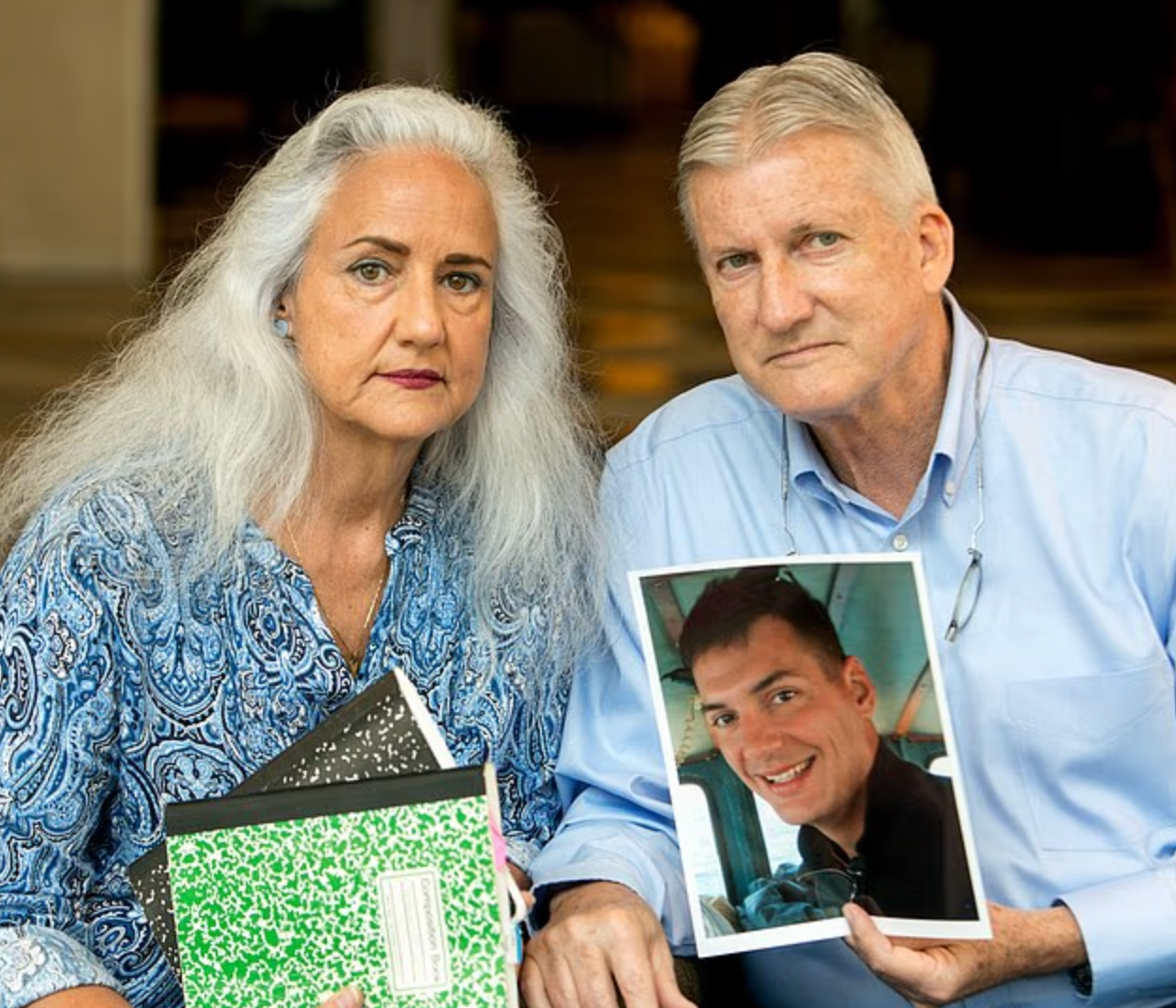
Austin Tice was a freelance journalist covering the Syrian revolution for multiple outlets, including The Washington Post, when he was abducted on August 14, 2012, at the age of 31.
He had been reporting from opposition-held areas in the Damascus countryside after entering Syria through Lebanon.
Later, according to Syrian opposition media, the fallen al-Assad regime fabricated a video claiming that Tice had been kidnapped by “unknown armed groups” in an attempt to deflect responsibility for his arrest.
The footage, however, appeared staged, crudely produced in an intelligence-style setup. One U.S. intelligence official described it as follows, Those who made the video clearly spent a long time watching footage coming out of Afghanistan, and did a very poor job trying to imitate it.
On the tenth anniversary of Austin Tice’s abduction in 2022, the Biden administration reaffirmed its certainty that he was being held by the now-ousted al-Assad regime.
Following the fall of Bashar al-Assad’s government, the case of Austin Tice’s disappearance was fully reopened, with renewed efforts to determine his fate, whether he was alive or dead.
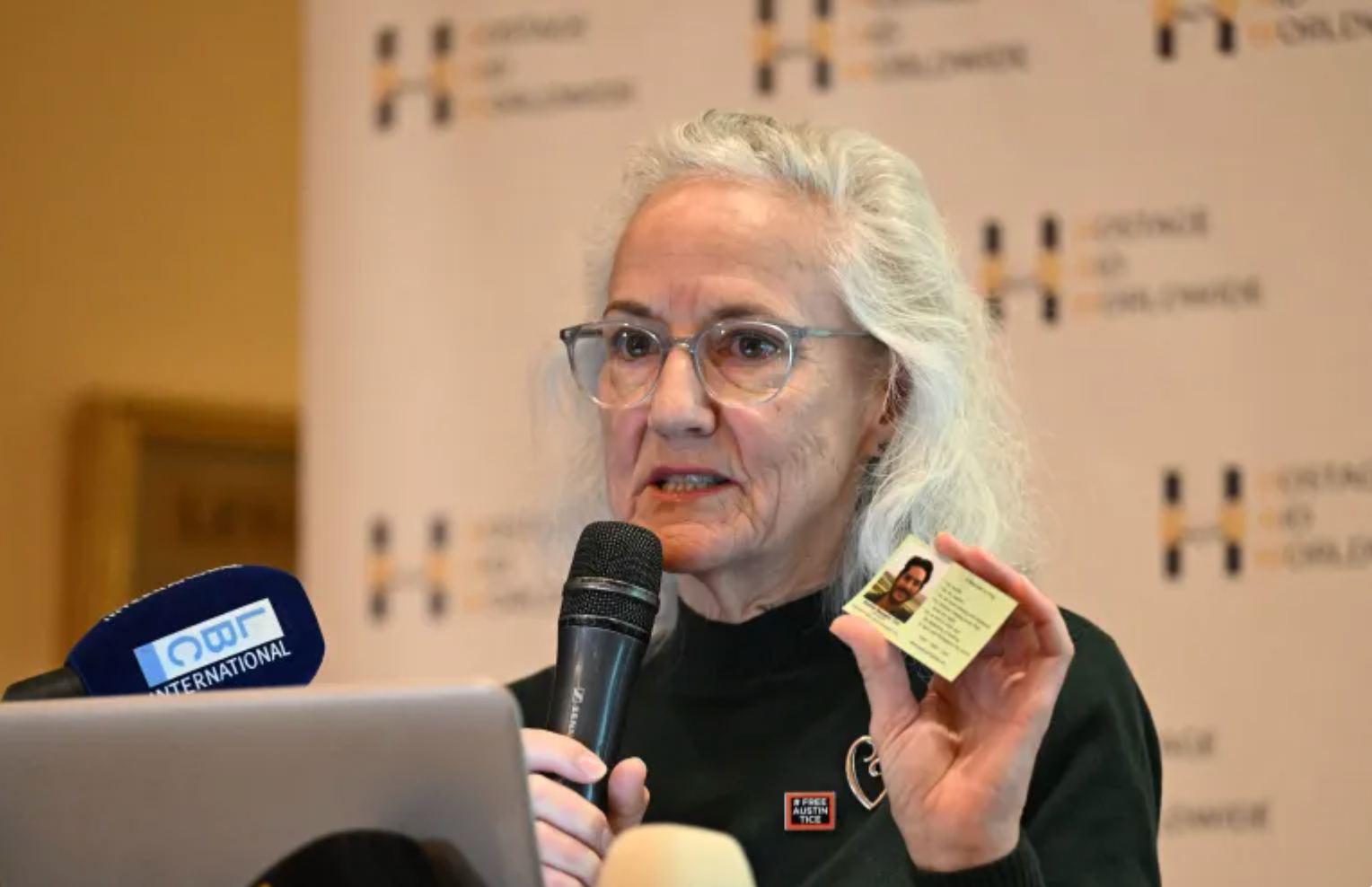
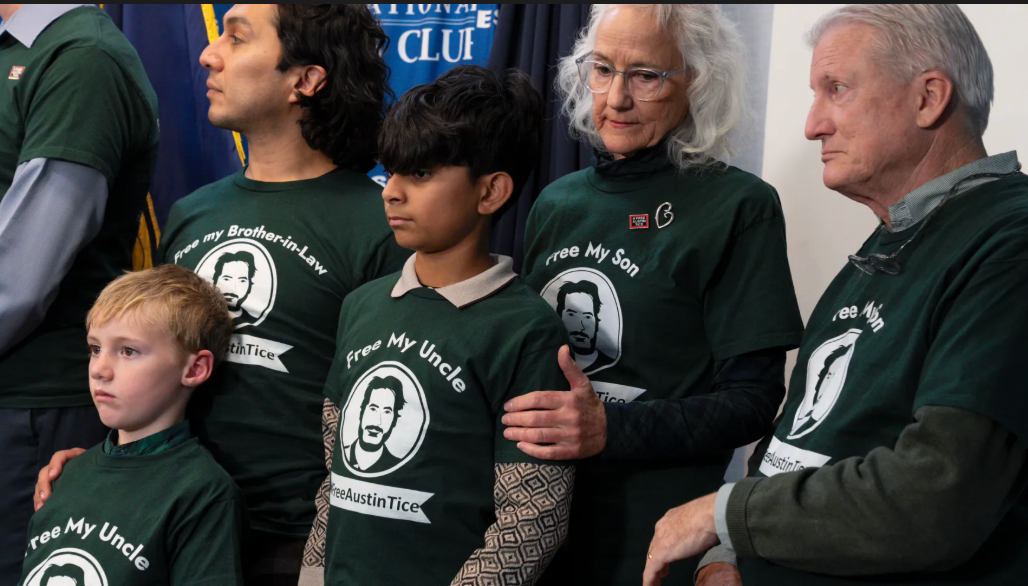
Debra Tice, the American journalist’s mother, visited Damascus on January 19, 2025, where she met with Syria’s transitional president, Ahmed al-Sharaa. The new Syrian leadership assured her that it was actively working to locate her son.
At the time, Debra expressed hope that the new U.S. administration under President Donald Trump would remain committed to bringing Austin home, noting that Trump’s team had already reached out to her regarding the search.
Notably, Debra stated in early May 2025 that Austin Tice’s whereabouts had been known up until the overthrow of Bashar al-Assad, citing extensive intelligence records that Trump’s team had recently allowed her to review.
Solving the Mystery
U.S. officials have long said that their efforts to trace Austin Tice, the journalist abducted in Syria in 2012, have yielded no reliable information about his whereabouts.
For at least a decade, the U.S. government was unable to locate Tice with any certainty, despite extensive diplomatic and intelligence efforts, including mediation by Oman and Lebanon in recent years to solve the mystery of his disappearance at the hands of the al-Assad regime, all of which failed to produce results.
Now, the testimony of Bashar al-Assad’s former adviser, implicating the Syrian leader personally in the killing of Austin Tice, could open the door to legal action against al-Assad in U.S. courts.
Under U.S. law, anyone, even a non-American, can be prosecuted if they kill, abduct, or conspire to harm a U.S. citizen outside the country’s borders, provided they can be arrested or extradited to the United States.
In special cases such as that of journalist Austin Tice, the U.S. government may invoke laws related to international terrorism or crimes committed against American citizens to justify prosecution, even if the accused remain abroad, so long as there is compelling evidence of their involvement. Such cases can proceed through arrest, extradition, or trial in absentia.
However, the United States cannot execute arrest warrants on foreign soil without the cooperation of the host country.
Ahmad Qurbi, a researcher at the Syrian Dialogue Center, told Al-Estiklal that it is important to clarify a key point: the U.S. judiciary has so far not exercised its jurisdiction over any crimes committed by the former al-Assad regime.
Qurbi added that this is because U.S. law generally does not grant American courts the authority to rule on crimes committed outside the country, even if they constitute war crimes or crimes against humanity.
He explained, however, that there are specific exceptions, such as acts classified as terrorism or torture committed against U.S. citizens abroad, in which case the American judiciary may have jurisdiction to pursue prosecution.
The Role of the U.S. Judiciary
According to Qurbi, “I believe that with the fall of the al-Assad regime, and should a public case be opened before the U.S. judiciary, it is possible that an arrest warrant could be issued against Bashar al-Assad, who is currently residing in Russia.”
“Legally speaking, it would then become possible to take judicial action against him. While it may not mean his name would be circulated internationally as the French courts have done, the legal framework for doing so would certainly exist.”
“The U.S. judiciary may exercise caution or apply greater scrutiny at this stage, given that the crime is attributed to a sitting head of state, a position that grants Bashar al-Assad temporary immunity, which could hinder the progress of the case.”
“In principle, the U.S. judiciary has jurisdiction to consider cases involving acts of terrorism or torture committed against American citizens outside U.S. territory,” Qurbi added.
“The evidence currently available consists of the testimony of Major General Bassam al-Hassan, who stated that Bashar al-Assad personally ordered the execution of American journalist Austin Tice. This testimony represents significant, perhaps the most significant, evidence of al-Assad’s direct involvement in Tice’s execution, though it is not in itself conclusive.”
“Ultimately, the main legal obstacle remains the immunity afforded to a head of state, which could prevent the issuance of a direct arrest warrant against him, as was the case in similar proceedings before French courts,” Qurbi concluded.
France, meanwhile, issued a new international arrest warrant for Bashar al-Assad in Paris on October 23, 2025, over deadly chemical attacks carried out in 2013, bringing the total number of warrants issued by French courts against him to three.
A judicial source told Agence France-Presse at the time that the warrant, issued for complicity in crimes against humanity and war crimes, was signed by Paris investigative judges on July 29, 2025.
France’s Court of Cassation had previously annulled a November 2023 arrest warrant on July 25, 2025, citing the absolute immunity of a sitting head of state, as al-Assad was still in power at the time.
However, the country’s highest judicial authority later ruled that new warrants could be issued following Assad’s ouster. On the same day, France’s National Anti-Terrorism Prosecutor’s Office (PNAT), responsible for investigating crimes against humanity, formally requested a new arrest warrant against him.
French courts had already issued two previous warrants for Bashar al-Assad, the first on January 20, 2025, for complicity in war crimes over the bombing of a civilian neighborhood in Daraa, southern Syria, in 2017.
The second, dated August 19, 2012, charged him with complicity in war crimes and crimes against humanity over the shelling of a media center in Homs in 2012, which killed American journalist Marie Colvin and French photographer Remi Ochlik.
The former Syrian president could be tried in France, even in absentia, should investigative judges decide to proceed following the judicial inquiry.
Sources
- “Imprisoned in the Mill” — Assad’s Adviser Accuses Him of Ordering the Execution: CNN Reveals New Details in the Mysterious Case of Austin Tice [Arabic]
- Mother of Journalist Austin Tice: The New Syrian Leadership Is Determined to Bring My Son Home [Arabic]
- Tice family says U.S. had knowledge of Austin’s location for years
- Mystery of US journalist who vanished in Syria 13 years ago is finally 'solved' in most tragic way